An official website of the United States government


 ) or https:// means you've safely connected to the .mil website. Share sensitive information only on official, secure websites.


Antonio Cortizas was an artist, teacher, and Army master specialist. His work changed how the military cared for wounded service members during World War II and long after.
Born in Cuba, Cortizas came to the United States in 1924 at age 19. He had a strong interest in art and service. He studied at the New Jersey School of Industrial Art in Newark. Later, he attended the Pennsylvania Academy of the Fine Arts in Philadelphia. There, he earned national awards and a scholarship to study in Europe. Before the war, he taught sculpture and drawing at Swarthmore College in Pennsylvania. He also helped start early hospital-based art therapy programs at Roseneath Farms Sanatorium and Jefferson Hospital Philadelphia.
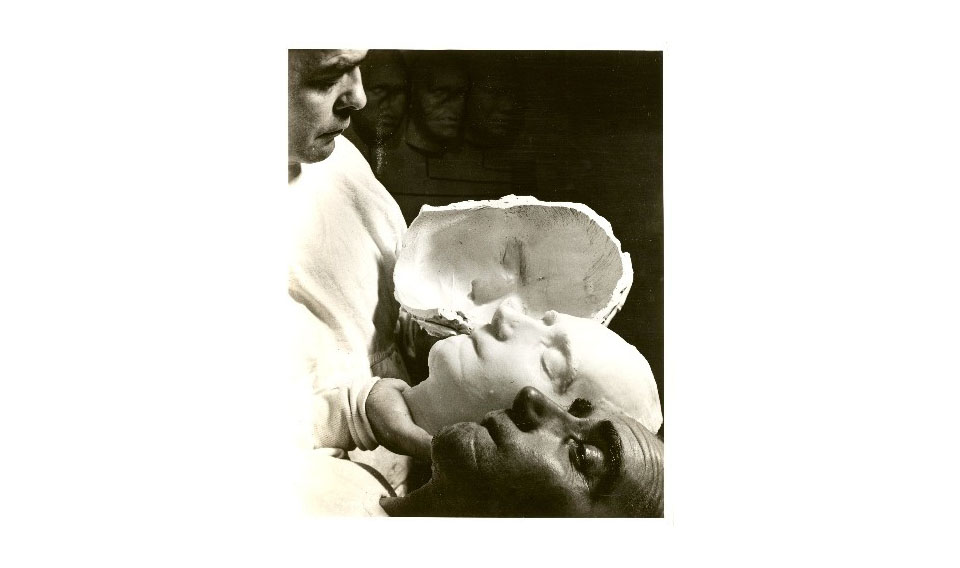
Master Specialist Antonio Cortizas, medical sculptor and tattooist at the Armed Forces Institute of Pathology, removes mold from replica of wounded soldierâs face (in foreground). OHA 87-049-0004-024
When Cortizas joined the Army in 1942, there was no role for a sculptor, but he changed that.
Assigned to Camp Pickett in Virginia, Cortizas convinced officers that sculpture could help train medical students. He used his own time and materials to make three-dimensional anatomical models. The models helped students better understand medical concepts. Convinced that art had a role in medicine, The Army created the 1st Medico-Military Arts Unit with Cortizas and his five assistants. Together, they built models using Cortizas' art techniques.
In 1945, Cortizas was sent to O'Reilly General Hospital in Springfield, Missouri. There, he developed new occupational therapy programs for wounded service members. His work earned national recognition. He received the Philadelphia Art Alliance Medal of Achievement for "the best work of the kind to be done anywhere in the United States." It was there that Cortizas began medical tattooing.
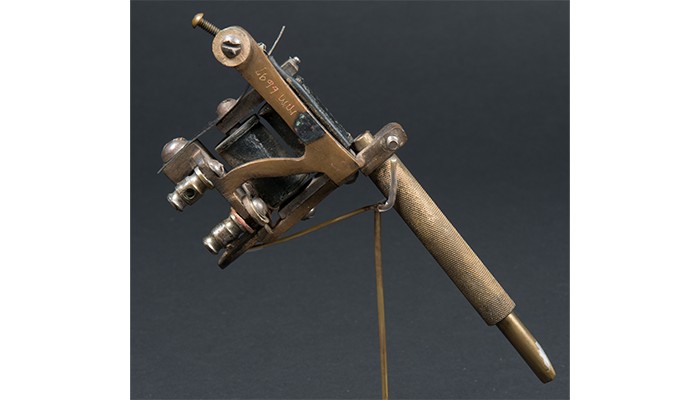
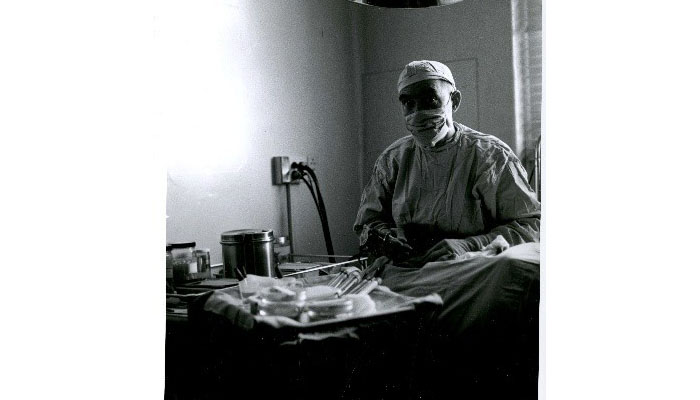
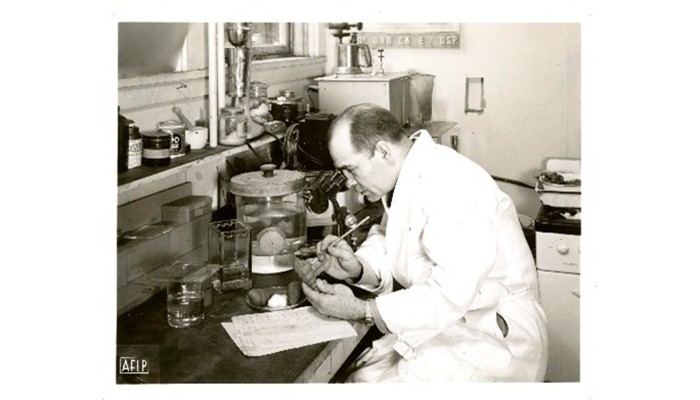
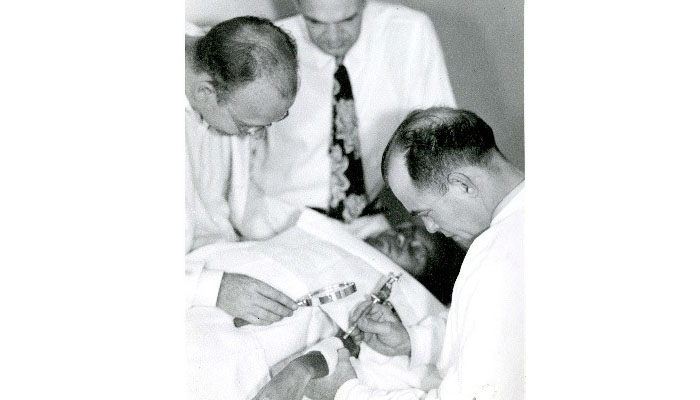
He helped soldiers with burns and injuries by restoring skin tone and appearance. One soldier, after seeing his reflection, said, "It's like being born again. It's a miracle." Former Army Surgeon General Maj. Gen. Raymond Bliss later said of Cortizas, "He has given hope to thousands."
In 1947, the Army sent Cortizas to the Army Institute of Pathology in Washington, D.C. While there, he also worked as a plastic surgery consultant at Walter Reed General Hospital. At the AIP, he worked with the institute's Medical Illustration Service. He created anatomical models and medical training aids. He also improved medical tattooing techniques and trained physicians across the country. In 1951, the U.S. Public Health Command requested that AIP send him to the National Leprosarium in Carville, Louisiana, where he used medical tattooing to restore natural color to skin and lips that had been rebuilt through skin grafts for patients with Hansen's disease.
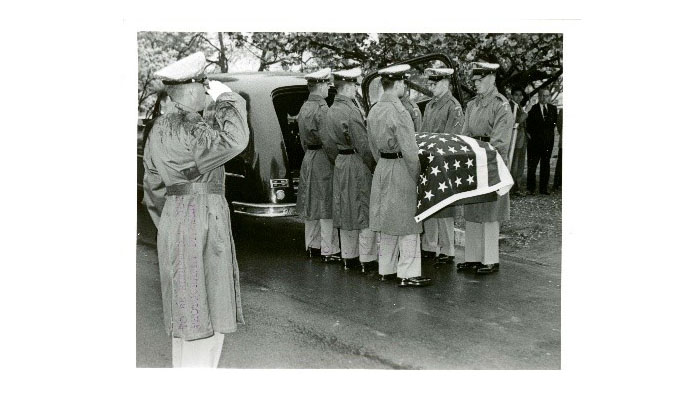
U.S. Military pallbearers carry casket of Master Specialist Antonio Cortizas, U.S. Army medical sculptor and tattooist, from Walter Reed Memorial Chapel, Washington, D.C., May 2, 1956. OHA 87-049-0004-039
Cortizas remained at the Armed Forces Institute of Pathology and Walter Reed Army Hospital until his death in 1956. He died at Walter Reed, the same place where he had spent years quietly changing lives. Through his work. He helped train military medical staff, improving how they care for injured service members and supporting warfighter medical readiness. His life shows that healing comes from more than medicine. Creativity, patience, and care can also heal. As Cortizas once said, "A man can't leave his work." In the end, he never did.
Resources
Cortizas, Antonio. Subject file. Box 049, Folder 00004. OHA 87: AFIP Historical Files. Otis Historical Archives. National Museum of Health and Medicine