An official website of the United States government


 ) or https:// means you've safely connected to the .mil website. Share sensitive information only on official, secure websites.


From April to August 1898, the United States fought Spanish forces during the Spanish-American War. But it wasn't bullets or bayonets that killed the most, it was disease. Dysentery, malaria, typhoid and yellow fever were far deadlier than conventional weapons of war. Yellow fever, while less prevalent among U.S. service members than typhoid fever, still infected more than 2,000 troops during the invasion of Cuba. By the time U.S. forces arrived in Cuba, yellow fever and other diseases had decimated the Spanish forces, leaving only 55,000 able-bodied troops out of an estimated 230,000 Spanish fighters.

Typhoid cases, ward in Spanish military hospital, Ponce, Puerto Rico, 1898," (OHA 313-030). OHA 313 Spanish-American War Photographs Collection.
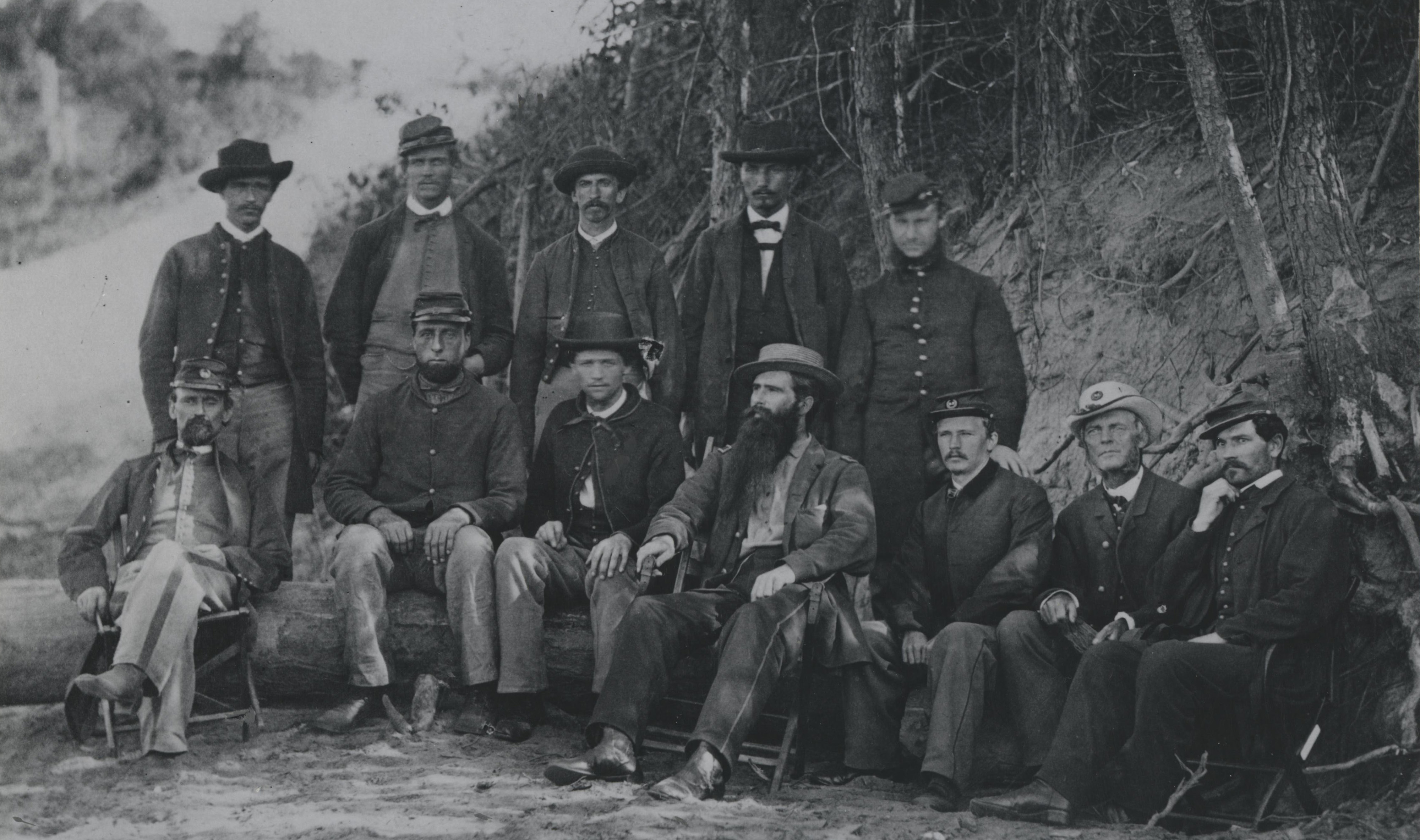
Yellow fever continued to plague U.S. Armed Forces as the Spanish-American War ended and the Philippine-American War began. By 1900, Army Surgeon General George Sternberg commissioned a study of yellow fever. Walter Reed, James Carroll, Jesse Lazear, and Aristides Agramonte formed a four-person board to lead the research. In June 1900, the commission began its experiments outside Havana, Cuba.

Army volunteers, Yellow Fever Commission, Camp Lazear, outside of Havana, Cuba, 1900," (OHA 309-001-00010). OHA 309 Sontag Collection.
At the same time, a young woman named Clara Louise Maass was working as a contract nurse in the Philippines. The eldest daughter of nine children, she was born to a poor German immigrant family in East Orange, New Jersey. Clara began working at an early age to help support her family, taking her first job while in grammar school. In high school, she worked as a "mother's helper," living with a wealthier family to assist with raising children and performing household chores. By age 15, she was employed at the Newark Orphan Asylum, earning $10 per month for seven days of work each week. At 17 she enrolled at the Christina Trefz Training School of Nurses at Newark German Hospital, and by 1898, at age 21, she had become the head nurse.

Portrait of Clara Louise Maass, 1895" (MIS 05-6619-1). OHA 233.05 Medical Illustration Service (MIS) Library Collection.
That same year, at the start of the Spanish-American War, she joined the war effort as a contract nurse (the military Nurse Corps had not yet been established). There she witnessed firsthand the toll that typhoid and yellow fever took on U.S. troops. After the war, she took a new contract and traveled to the Philippines to nurse sick service members back to health. When she became sick, she was sent back to the United States. Not long after, she accepted another contract position — this time to assist the work of the Yellow Fever Commission.
While Reed finished his experiments to confirm that the local Aedes aegypti mosquito was the carrier of the disease, Maj. William Gorgas began his work at Las Animas Hospital. Gorgas was interested in whether those bitten and infected by the Aedes aegypti mosquito would become inoculated, gaining immunity to the disease through exposure to a small amount of the living virus. Havana, meanwhile, was amid a severe yellow fever outbreak that killed roughly 1 in 10 people.

Illustration, Aedes (Stegomyia) aegypti Linnaeus, 1762, illustrated by Nelson Leandro Cerqueira, Serviço Nacional de Febre Amarela (National Yellow Fever Service), Brazil, 1948" (MIS 54-13280-2). OHA 233.05 Medical Illustration Service (MIS) Library Collection.
The Yellow Fever Commission offered $100 to volunteers and $200 to those who became successfully infected. Maass was among the first to volunteer. Already working with infected patients, she believed that if inoculation worked, she could more safely carry out her work. She was the only woman and the only American among the 19 volunteers. In March 1901, Maass was successfully infected with a mild case of yellow fever and recovered. In August 1901, she volunteered again to be bitten to study her resistance. Unfortunately, her original infection was not sufficient to immunize her, and she was infected with a more virulent strain of the disease, which ultimately led to her death at age 25.
Maass' death proved that the bite of an infected mosquito did not provide lasting immunity. Shortly after her death, Gorgas began a massive eradication of the Aedes aegypti mosquito. The extermination efforts were so successful that no cases of yellow fever were reported in Havana from October 1901 to June 1902, after almost 150 years of recurring outbreaks.

Gen. William Gorgas looking at stagnant retention pond during the construction of the Panama Canal, a potential breeding ground for mosquitos," (Reeve 62703). OHA 80 Reeve Photograph Collection.
News of Maass' death circulated widely in New York City newspapers. The New York Times eulogized her, writing, "The annals of medicine are full of the records of the noblest and most disinterested self-sacrifice for the sake of truth. No soldier in the late war placed his life in peril for better reasons than those which prompted this faithful nurse to risk hers." ("THE THIRD MOSQUITO VICTIM.; Miss Clara Maas Dies from Yellow Fever at Havana After Being Bitten by an Infected Insect." New York Times, August 25, 1901)
The Yellow Fever Commission was ordered to disband shortly after her death. Gorgas would continue his crusade against yellow fever, working throughout Central America — including during the construction of the Panama Canal. Gorgas and Reed would go on to be credited with saving millions of lives thanks to their research and pest management efforts. The commission's work would lead to the creation of the earliest yellow fever vaccine a quarter century later.
Clara Maass and her sacrifice continue to be remembered as well. In 1951, commemorating the 50th anniversary of her death, Cuba issued a postage stamp with her likeness. The United States issued a similar commemorative stamp in 1976 marking the 100th anniversary of Maass' birth. She was the first American nurse to be commemorated on a U.S. stamp, and the first nurse to have a U.S. hospital named after her, the Clara Maass Medical Center in Belleville, New Jersey.


Resources
Walter Reed – A Name for the Ages
Typhoid Mary/Mary Mallon: An Asymptomatic Carrier of Salmonella typhi
Reed, Walter, Victor A. Vaughan, and Edward O. Shakespeare. Origin and Spread of Typhoid Fever in U.S. Military Camps During the Spanish War of 1898, Volume 1. Washington DC: Government Printing Office, 1904.
OHA 177 Gorgas Hospital Autopsies and Pathology Reports
OHA 356 Walter Reed Yellow Fever Campaign Slide Set