An official website of the United States government


 ) or https:// means you've safely connected to the .mil website. Share sensitive information only on official, secure websites.


Twenty-five years ago, on Sept. 11, 2001, terrorists hijacked four commercial airliners and attacked the United States. Two planes struck the World Trade Center in New York City. One struck the Pentagon in Arlington, Virginia. Another crashed near Shanksville, Pennsylvania. Nearly 3,000 people lost their lives.
The attacks lasted only hours. But the identification and recovery efforts went on for years.
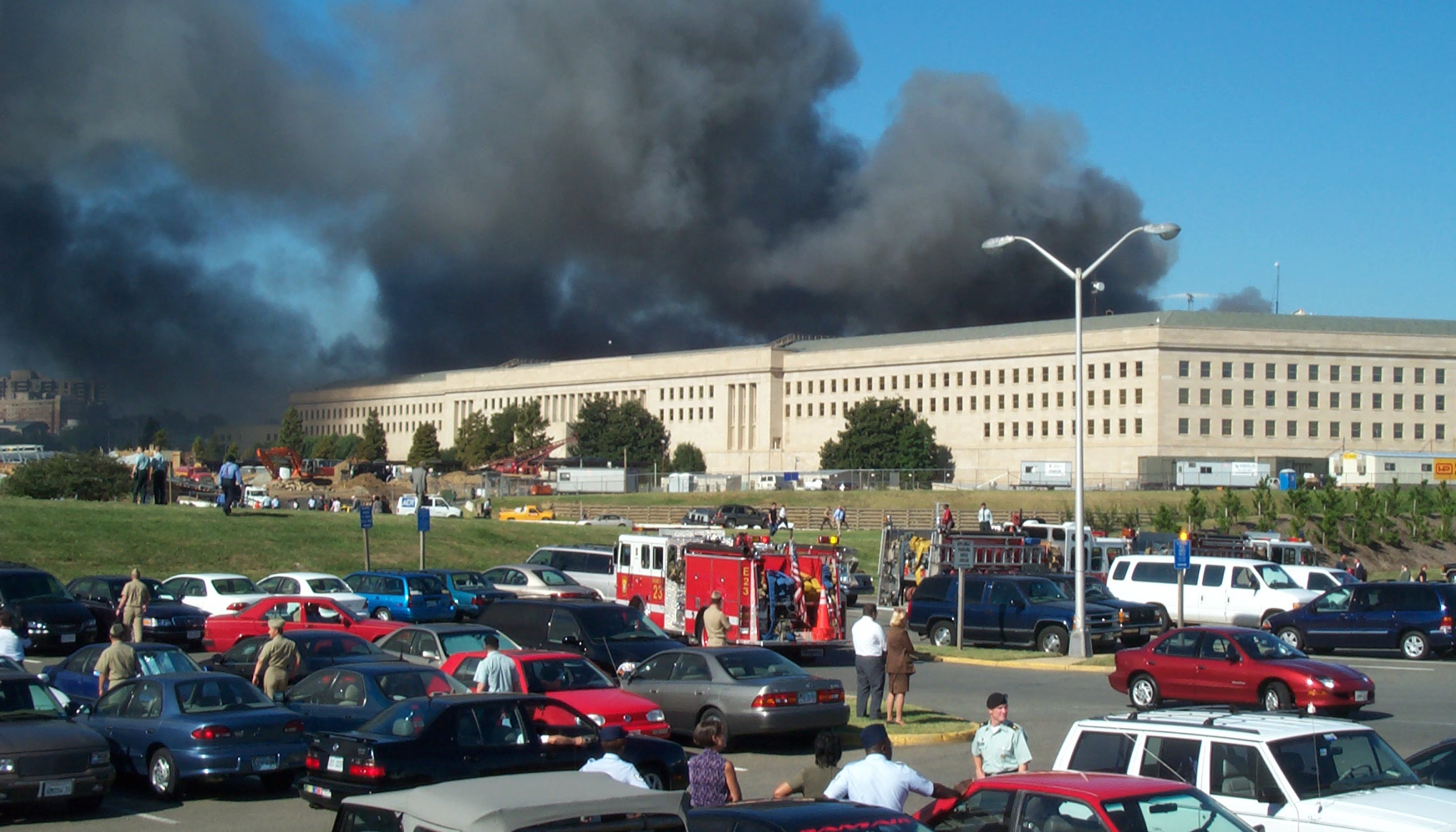
Thick smoke billows from the Pentagon within a few minutes of the 9-11 attack on the Pentagon, Department of Defense photograph, Sept. 11, 2001, (NCP 17386). OHA 250 New Contributed Photographs. Otis Historical Archives, National Museum of Health and Medicine.
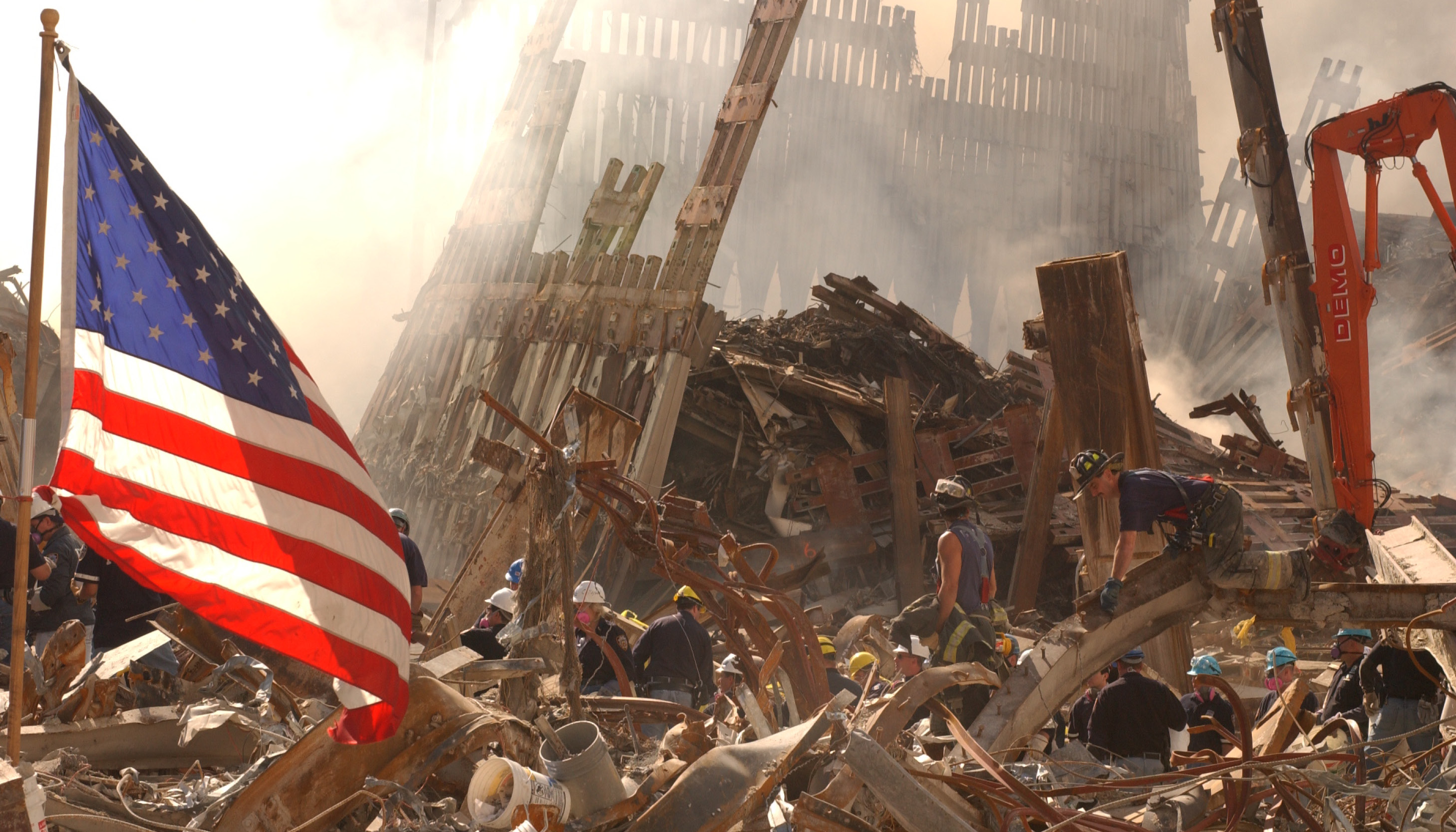
New York, NY, Sept. 19, 2001. Rescue workers climb over and dig through piles of rubble from the destroyed World Trade Center as the American flag billows over the debris. Photo by Adrea Booher/FEMA News Photo.
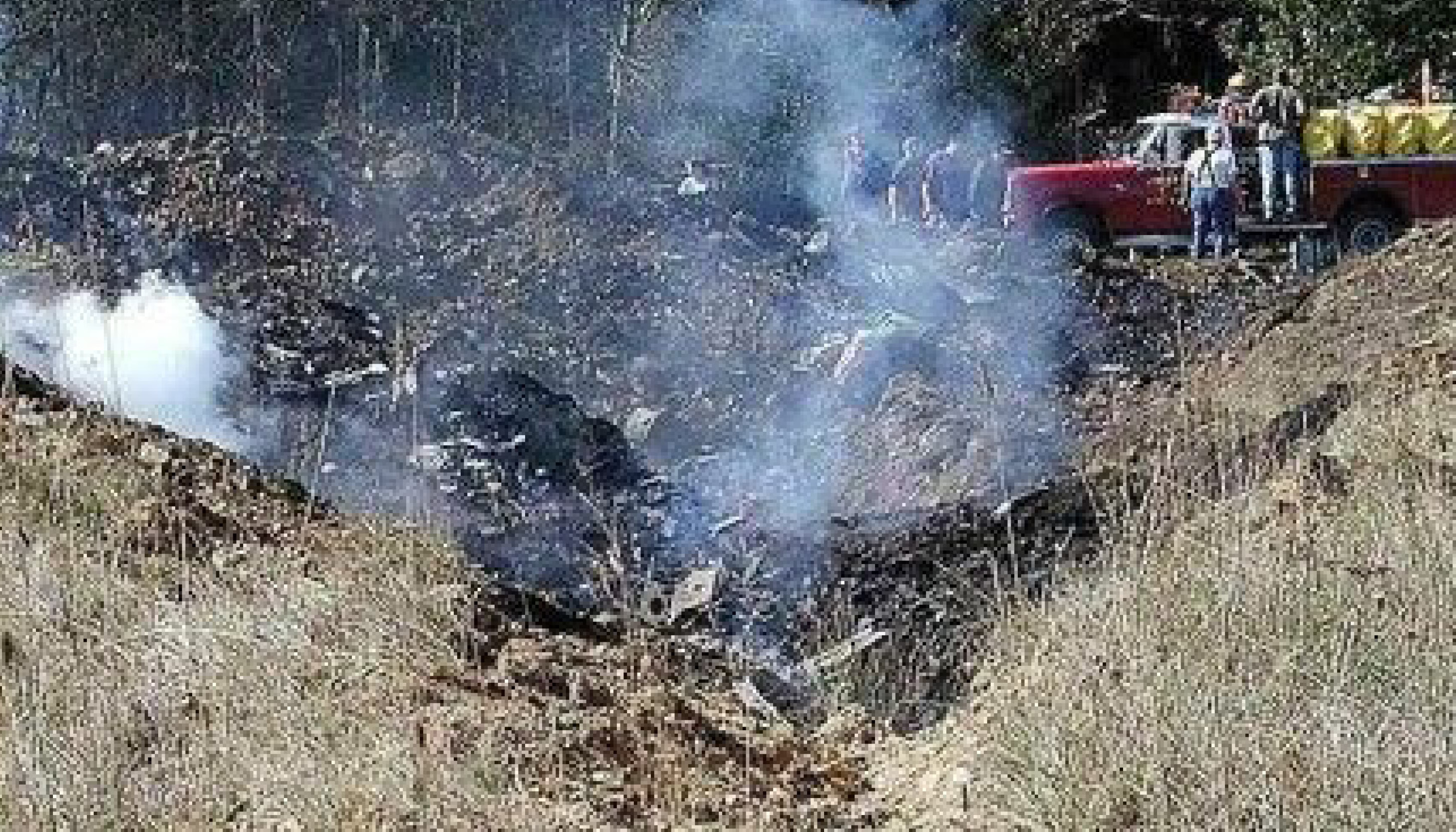
First responders at the crash site of United Airlines Flight 93, Sept. 11, 2001. Photo by Mark Stah/National Park Service Photo.
First responders searched for survivors and cared for the injured. Recovery teams searched through the wreckage, while medical teams treated injuries and monitored potential health risks. Forensic specialists faced the difficult task of identifying those who died and helping return their remains to their families.
The Armed Forces Institute of Pathology played a major role in this work.
After the Pentagon attack, AFIP's Office of the Armed Forces Medical Examiner led the effort to identify victims' remains. The work took place at Dover Air Force Base, Delaware. More than 100 military and civilian experts joined in the effort. Teams worked 12-hour shifts, seven days a week, for two months.
The AFIP brought years of experience to the mission. These military experts used dental records, fingerprints, medical records, and DNA to identify the victims and terrorists. The extreme force of a high-velocity plane crash, combined with fire, made the services of the Armed Forces DNA Identification Laboratory uniquely valuable. Using DNA and family references, like fingerprints and hair and saliva samples, AFDIL identified the severely fragmented, degraded, and commingled remains of 75 of the 183 victims as well as the 5 terrorists. The other 108 victims were identified using more traditional methods.
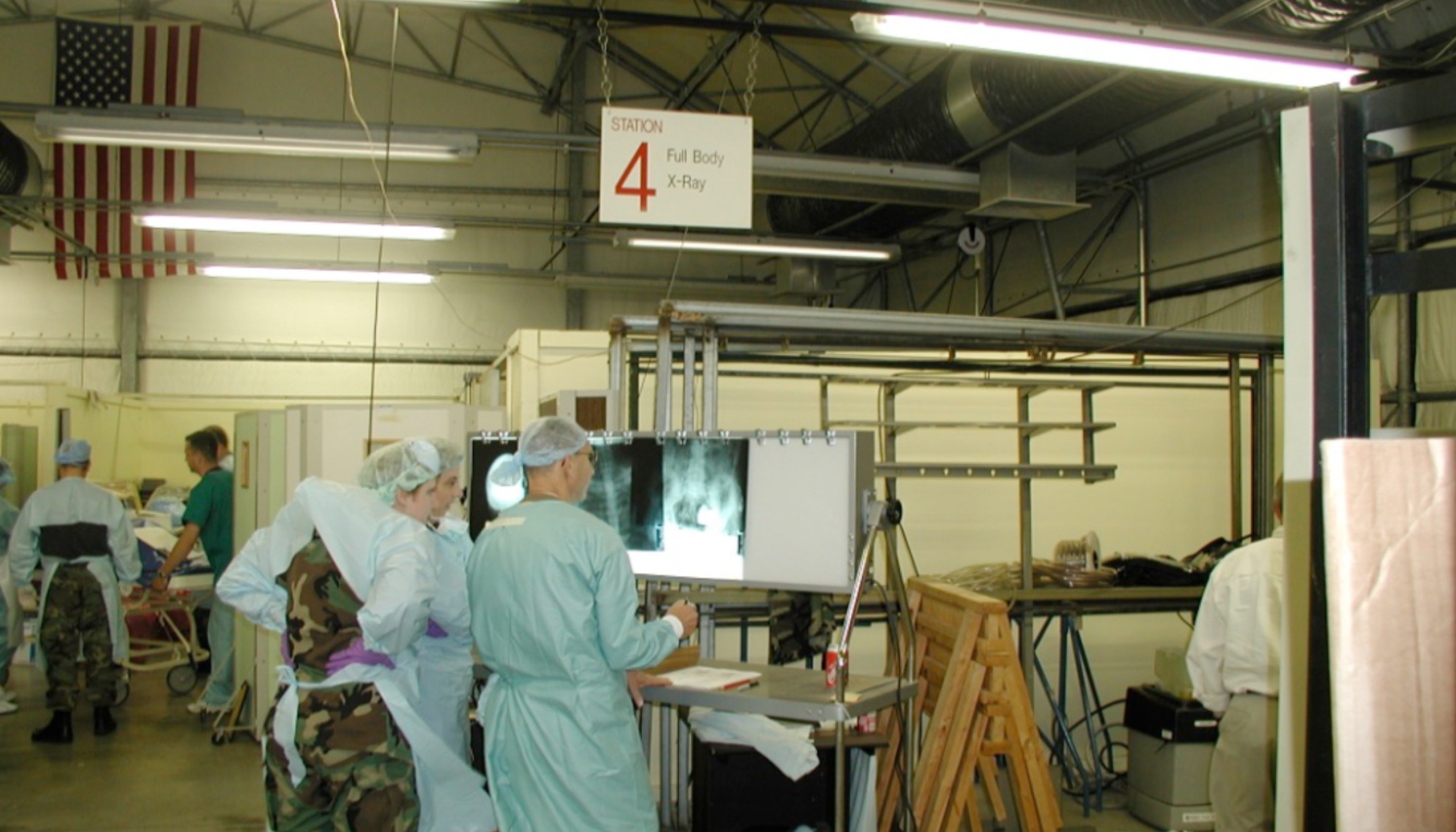
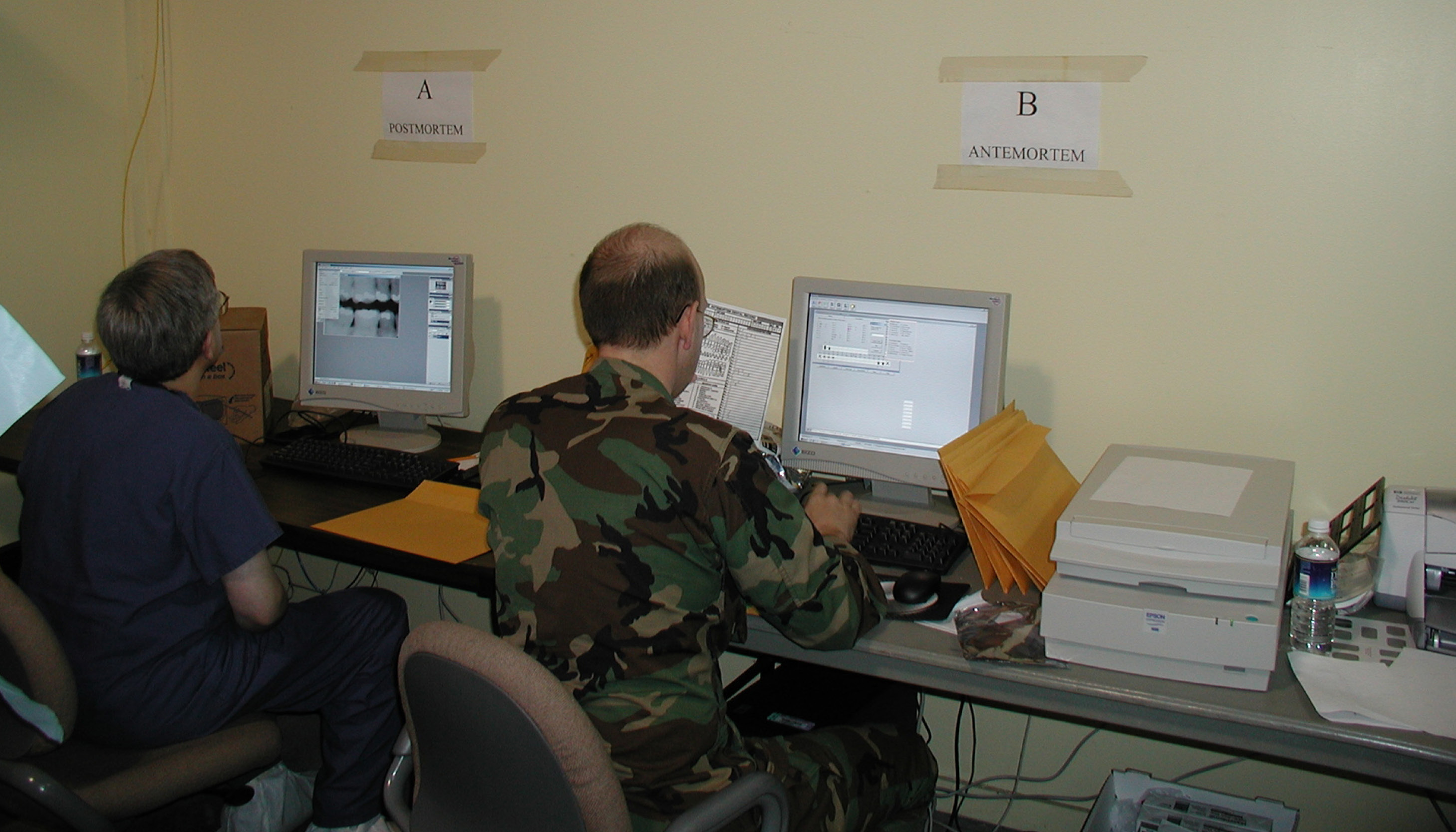
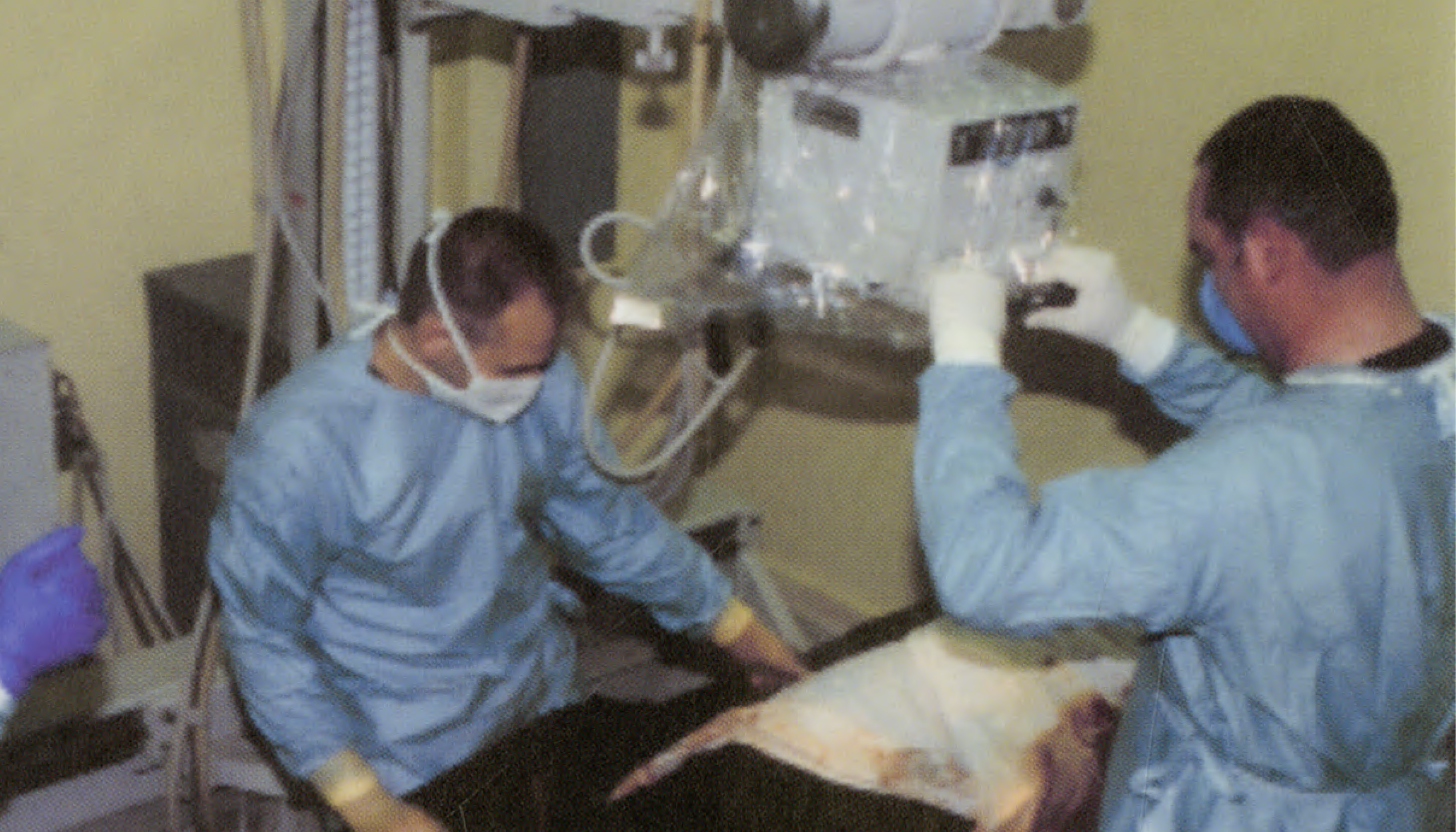
The AFIP also helped in Pennsylvania. The FBI led the effort to identify the victims of United Airlines Flight 93. A Disaster Mortuary Operational Response Team helped with the work. Paul Sledzik and Lenore Barbian, staff members at the National Museum of Health and Medicine served on that team.
Sledzik led the team, while Barbian served as a forensic anthropologist. Prior to assisting with the identification of victims of the 9/11 attacks, both had spent years studying skeletal remains and soft tissue specimens at the museum. Their museum work gave them skills that were critical to the identification effort. They served in Pennsylvania from Sept. 13 to 25, 2001.
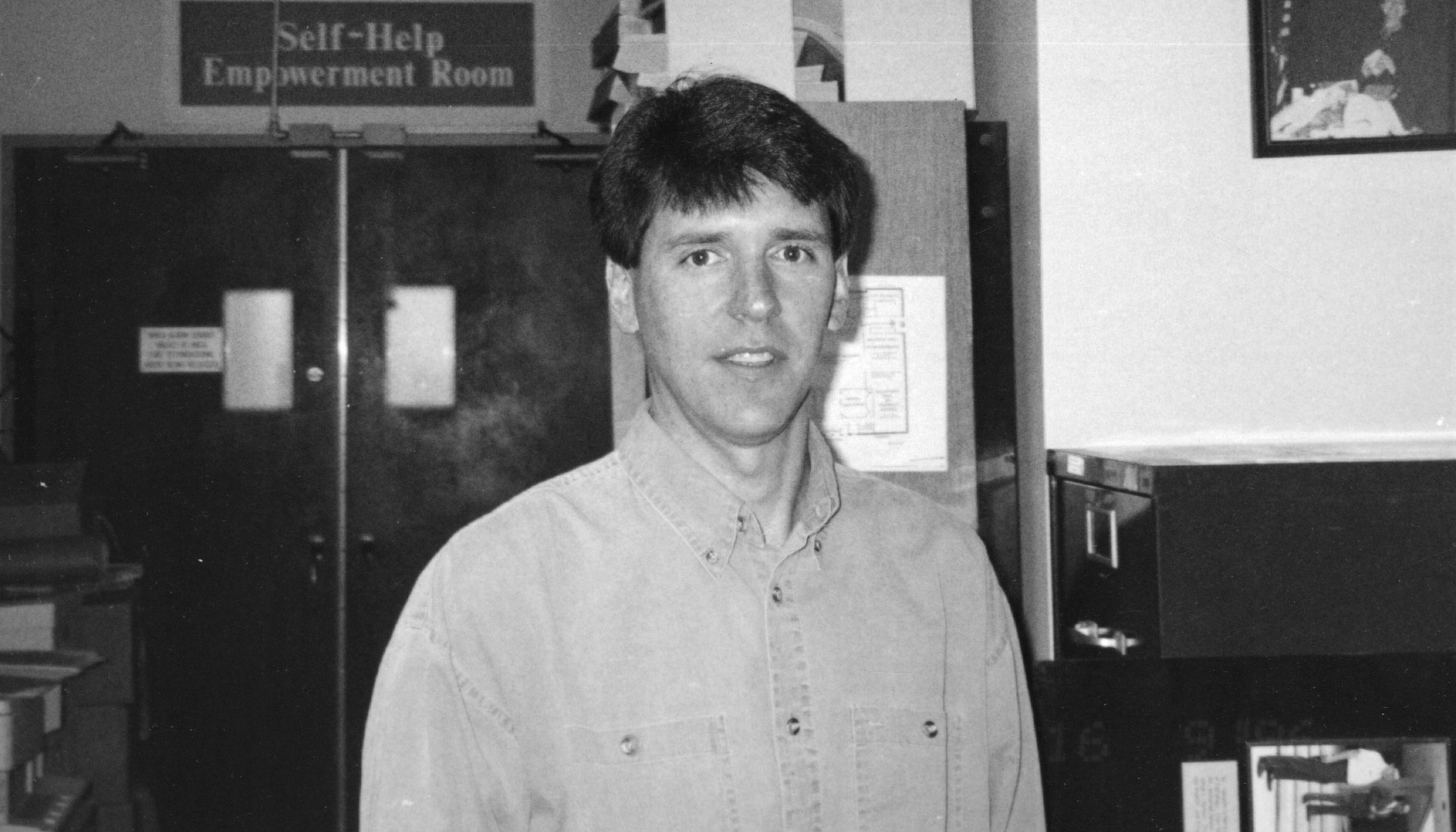
Paul Sledzik, Anatomical Collections Manager, National Museum of Health and Medicine from 1990 to 2004, Washington, DC, (AFIP Public Affairs 08-1009-1). OHA 90.05 Armed Forces Institute of Pathology (AFIP) Public Affairs Office, Chris Kelly.
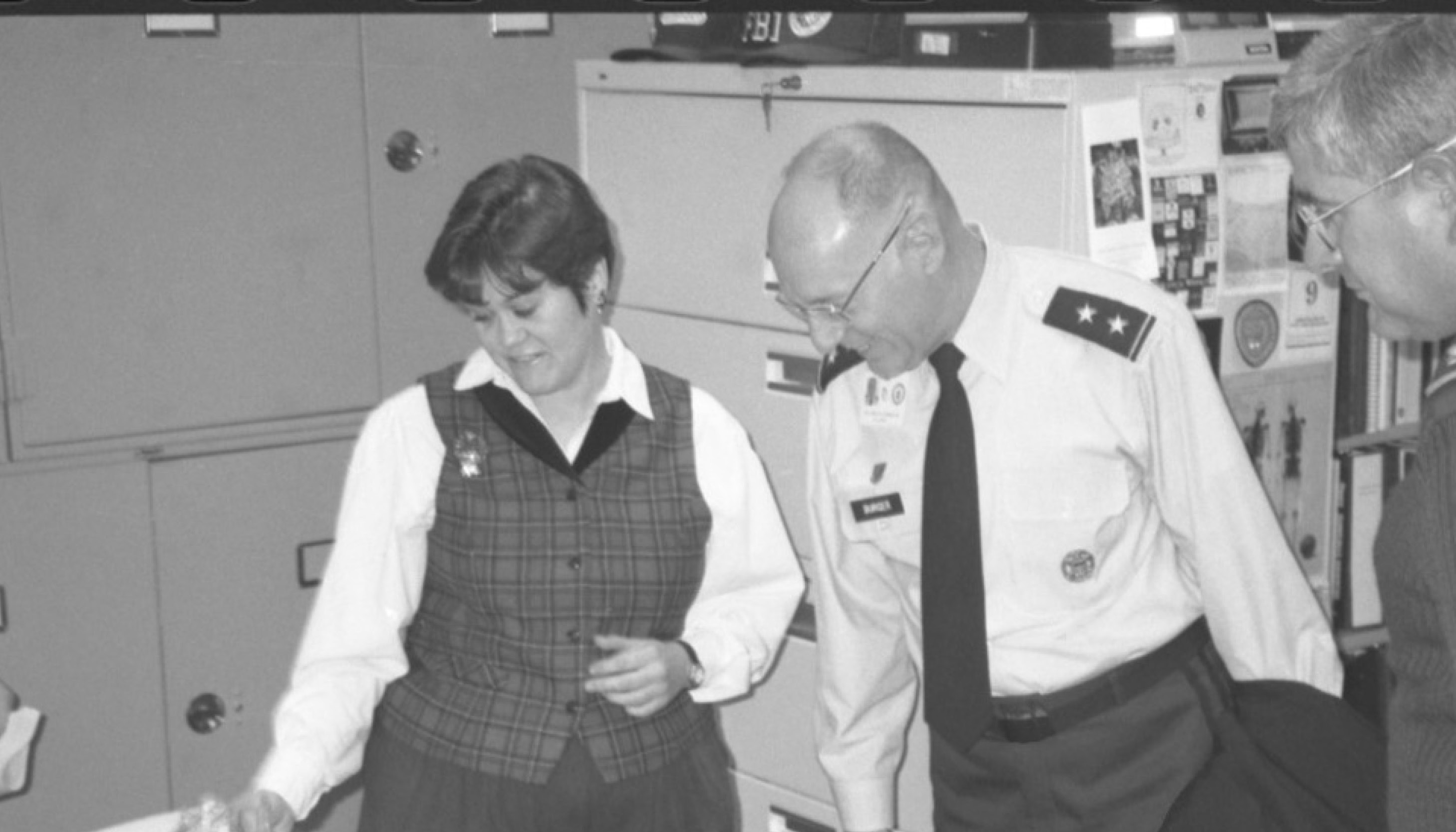
Lenore T. Barbian, Anatomical Collections Specialist, at the National Museum of Health and Medicine from 1995 to 2006, displays anatomical specimens from the museum's collection during the visit of Maj. Gen. Burger and Col. Dickerson, Jan. 14, 1992, (AFIP Public Affairs 08-0047-33). OHA 90.05 Armed Forces Institute of Pathology (AFIP) Public Affairs Office, Chris Kelly.
But the response did not end there. After 9/11, AFIP and other groups looked closely at what happened. They asked what worked, what did not, and what they could do better.
AFIP found several problems. Teams did not have one system to track remains and identification results. Communication was not always clear. Different offices sometimes asked for the same information. AFIP called for better tracking and reporting. It also called for one central office to handle requests for information.
Other parts of military medicine made changes, too. Hospitals rewrote emergency plans, updated equipment and restocked supplies. They worked to improve communication. Walter Reed Army Medical Center required staff to take emergency training each year. It also expanded training for chemical and biological attacks and set up a chemical decontamination program.
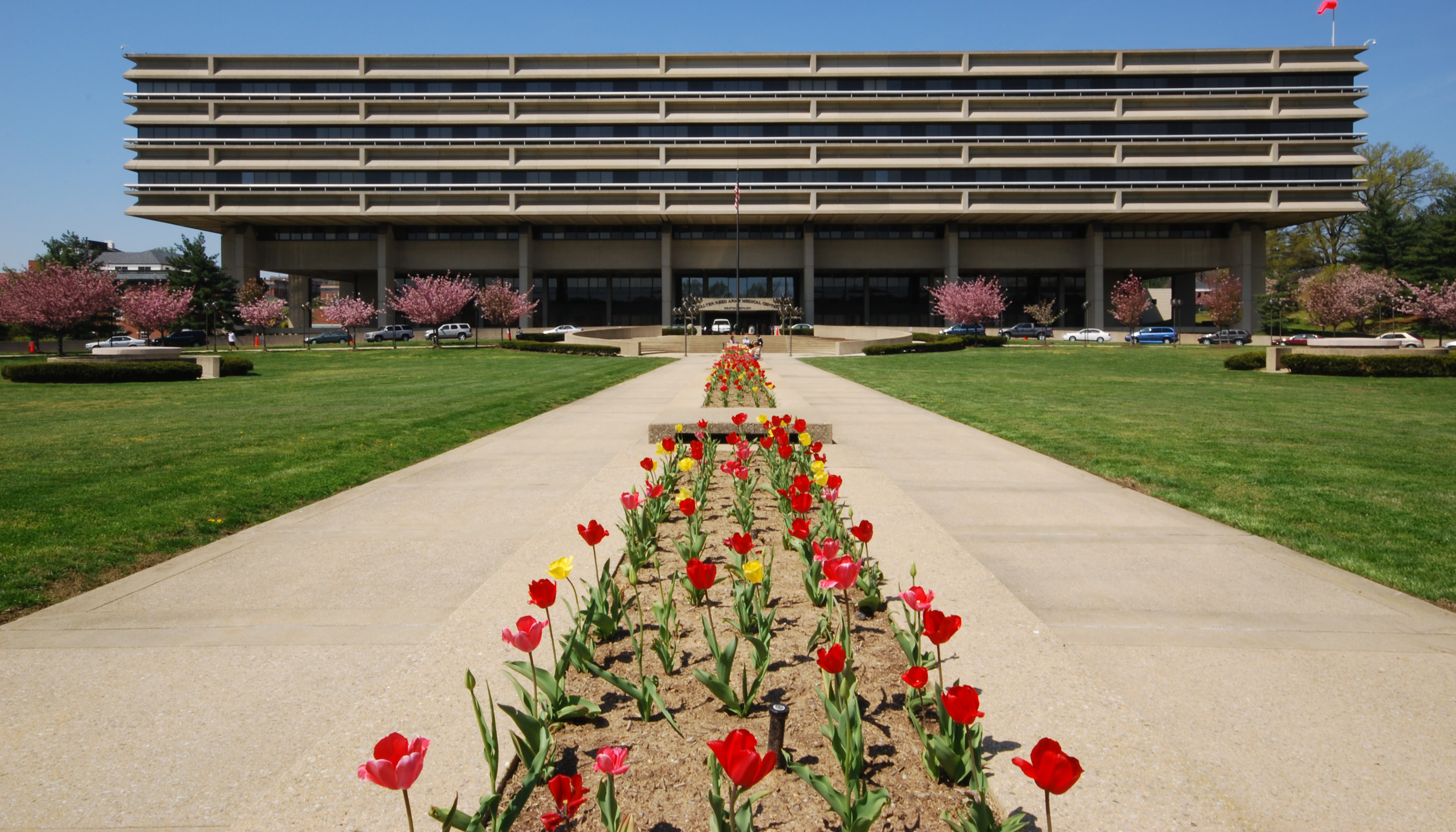
The entrance walkway at the Walter Reed Army Medical Center, c. 2009, Kathleen Stocker, photographer
Hospitals also learned that they needed to work more closely together. In Northern Virginia, military and civilian hospitals began meeting to plan for future emergencies. Their work helped lead to the Northern Virginia Hospital Alliance in 2002. The hospitals worked together to improve planning, communication, and the sharing of resources during large emergencies.
The U.S. Army Medical Command also put more focus on disaster planning. It created a homeland security division and created clearer plans for future emergencies. The command planned how Army medical teams could help federal, state, and local agencies during a national disaster.
Twenty-five years later, the museum remembers those who lost their lives on, and as a result of Sept. 11. It also honors those who stepped forward to help.
For AFIP and museum staff their support and response to this tragic event continues to have a lasting impact.
Resources
Institute, B. (2025). Borden Institute. Army.Mil. https://medcoe.army.mil/borden-tb-medical-response-to-911
Stone, P. (2011). Legacy of Excellence. U.S. Government Printing Office.