An official website of the United States government


 ) or https:// means you've safely connected to the .mil website. Share sensitive information only on official, secure websites.


In World War I, the U.S. Army faced a threat that did not come from enemy fire.
Sexually transmitted infections, then called venereal diseases, kept some Soldiers from training and serving overseas. Military leaders knew these diseases could weaken the force. They looked for better ways to teach Soldiers how to stay healthy.
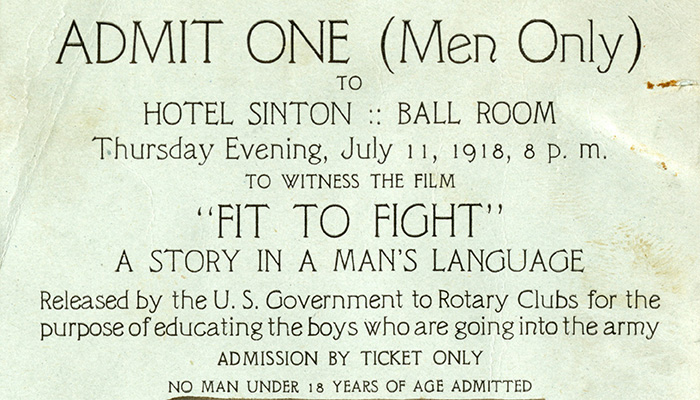
Ticket of admission for showing of "Fit to Fight" at the Hotel Sinton Ball Room, Cincinnati, OH, July 11, 1918 (OHA29-001-00003-1). OHA 29 Curatorial Records: World War I and II Photography and Film Records.
One answer was motion pictures. At the time, films offered a new way to teach large groups of Soldiers. Unlike lectures or printed materials, every audience received the same message, helping military leaders deliver consistent health information across training camps.
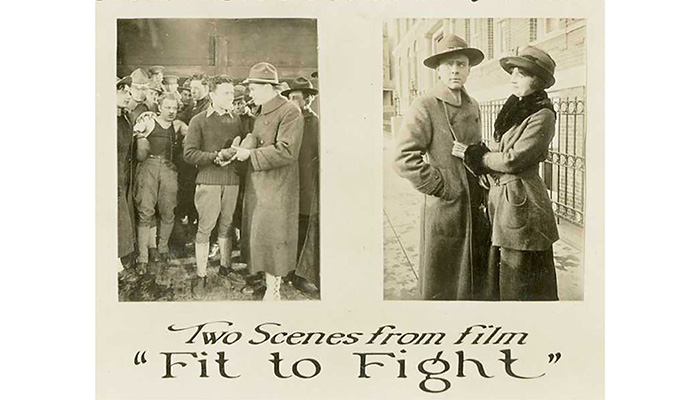
The Army produced Fit to Fight to teach Soldiers about venereal disease. The film showed how their choices could affect their health and service. The Commission on Training Camp Activities used the film to promote healthier choices in military training camps during World War I.
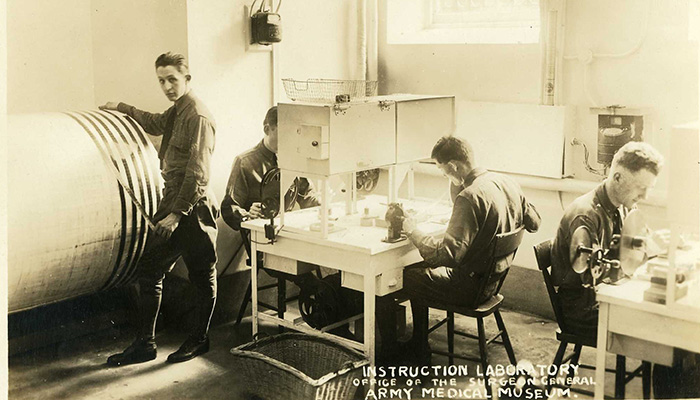
Motion picture cutting and polishing rooms, Motion Picture Section, Instruction Laboratory, Army Medical Museum (National Museum of Health and Medicine), World War I (Reeve 491-A). OHA 80 Reeve Photography Collection.
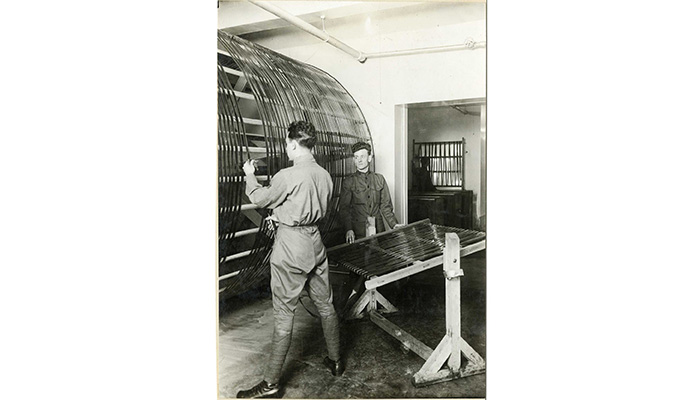
Motion picture cutting and polishing rooms with drying racks, Motion Picture Section, Instruction Laboratory, Army Medical Museum (National Museum of Health and Medicine), World War I (Reeve 491-B). OHA 80 Reeve Photography Collection.
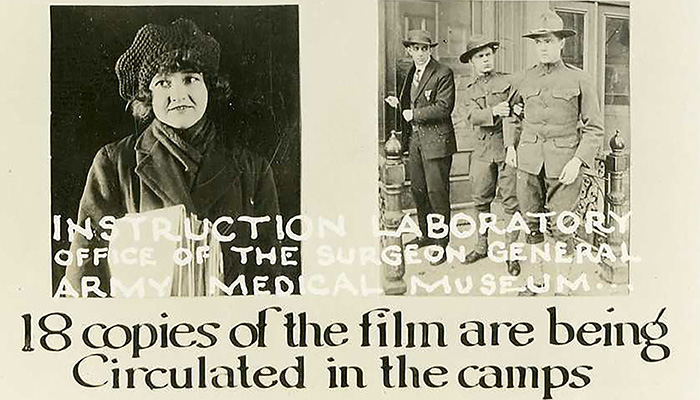
The Instruction Laboratory of the Army Medical Museum, the museum's predecessor, did still photographic and film work for Fit to Fight. The museum partnered with the Commission, lending medical and technical expertise in developing this new form of communication to support military health.
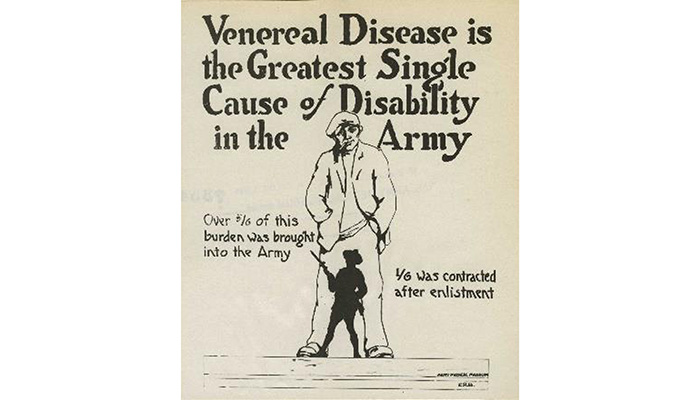
"Sexual health poster, 'Venereal disease is the greatest single cause of disability in the Army,' World War I," (Reeve 73542-1). OHA 80 Reeve Photograph Collection. Otis Historical Archives, National Museum of Health and Medicine.
The film followed five recruits from different backgrounds as they began their military training. Each received training about venereal disease and their choices led to different results. Some stayed healthy and served. Others became sick and could not go overseas. The film told a strict moral story about right and wrong. Future sex hygiene films would have more complex stories and outcomes, since changes in the narratives would reflect changes in society and policy.
The message was simple. One Soldier's choices could affect many people. If a Soldier became infected, they could be removed from training or duty, leaving their fellow Soldiers to carry the extra burden. The film reminded Soldiers that protecting their health also meant protecting their unit, their fellow Soldiers, and their families at home. Fit to Fight showed how military medicine was changing. Health education and disease prevention became an important part of protecting the force. Film gave the Army a new way to reach many Soldiers with the same message.
The film was only one part of a larger prevention campaign. Military leaders also expanded health education, medical examinations, disease reporting, and prophylaxis stations. Together, these efforts lowered venereal disease rates in some military communities. At the Newport News Port of Embarkation in Virginia, for example, the rate fell from 24.8 cases per 1,000 soldiers in June 1918 to 4.5 cases per 1,000 by November. The results showed that prevention and education could help keep more Soldiers healthy and ready for duty.
Although Fit to Fight was originally shown to recruits and Soldiers, its reach soon expanded beyond the military. Civic groups, community leaders, and other organizations asked for copies of the film to educate men about venereal disease as part of a larger national public health effort. Today, correspondence preserved in the museum's collections documents those requests and shows how a slightly edited version of the film, released to the public in 1919 with a new title, Fit to Win, reached people far beyond military training camps.
More than a century later, the tools have changed, but the mission continues.
Despite the development of treatments for STIs, these illnesses still pose a serious threat to the public and to military readiness, due to factors such as antibiotic resistance, cultural changes, and asymptomatic cases. Today, military medicine uses education, prevention, testing, and treatment to protect service members from sexually transmitted infections and other health threats. The goal remains the same: keep people healthy and ready to serve.
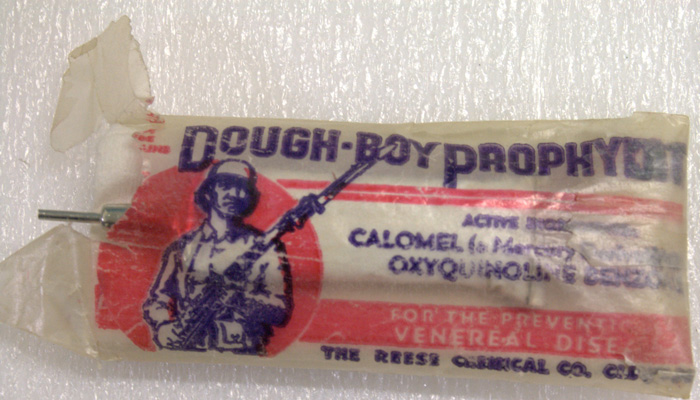
Dough-boy prophylactic "pro-kit." Soldiers used the contents of this kit to prevent venereal disease. (National Museum of Health and Medicine), World War I. NMHM 2020. 0004.1 Photography Collection.
The museum continues to preserve this history. The Otis Historical Archives holds correspondence about Fit to Fight from 1918 and 1919. The museum's collections also include a World War I prophylaxis, or "pro-kit," like the one shown in the film. At the time, Soldiers who had sexual intercourse while on leave were directed to report to a prophylaxis station, or "pro station," within three hours of potential exposure. At the station, medical staff gave Soldiers the "pro-kits" with instructions on how to use its contents to help prevent sexually transmitted infections, including syphilis and gonorrhea. The museum also keeps records of the Army's use of photography and film during the world wars. Together, these records and objects show how military medicine used education, prevention, and new technology to protect the force.
By preserving records and artifacts tied to Fit to Fight, the museum protects more than the history of one film. It preserves the story of how military medicine learned to use communication, education, and prevention as tools for readiness.
Fit to Fight reminds us that readiness does not begin on the battlefield. It begins with protecting the health of those who serve.
Resources
Now, Circulating. ""Fit to Fight": Home Front Army Doctors and vd during WW I." Circulating Now from NLM, 18 Oct. 2018.
"AFI|Catalog." Afi.com, 2021.
Boyle, E. W. (n.d.). OHA 29: Curatorial records: World War I and II photography and film records. Otis Historical Archives, National Museum of Health and Medicine, OHA 29.
Henry, Robert S. AFIP, Its First Century. Washington, D.C.: Office of the Surgeon General, Department of the Army, 1964.