An official website of the United States government


 ) or https:// means you've safely connected to the .mil website. Share sensitive information only on official, secure websites.


During the Vietnam War, Viet Cong forces used guerrilla warfare tactics to attack U.S. troops in ways that were often difficult to predict. U.S. Army accounts describe sniper fire, mines, booby traps, mortars, and ambushes as common ways Viet Cong forces harassed and wore down opposing troops.
Tripwire and pressure-triggered booby traps became one of the most dangerous parts of that fight. Some used explosives or ammunition. Others used sharpened stakes, including punji sticks, placed along trails, in jungle growth, and in other areas where troops were likely to move. One Army study of 758 enemy devices found more than one-third in jungle areas and about one-fifth along trails.
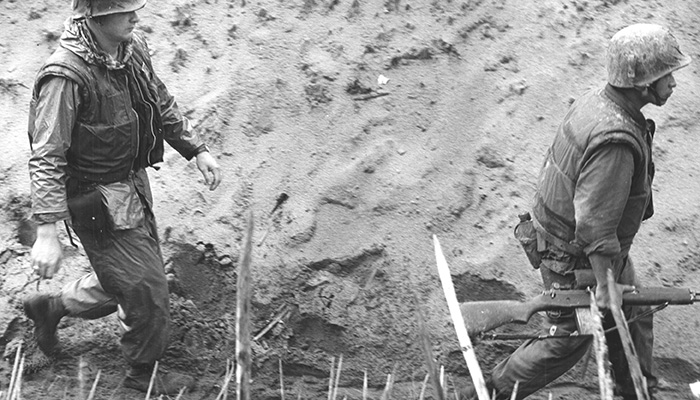
U.S. Marines from Company H, 2nd Battalion, 4th Marines, pass punji stakes during Operation Double Eagle in Vietnam, Jan. 29, 1966. Department of Defense photo (U.S. Marine Corps), A186576.
The devices were often simple, but the wounds could be severe. One foot-triggered trap from around 1966 used a shotgun shell as an improvised landmine. Punji sticks were also used in concealed booby traps and could pierce the feet and lower legs, leaving deep wounds that were difficult to clean and treat. A punji stick is a 1-to-3-foot sharpened wooden or bamboo spike. The Viet Cong dug shallow pits and drove punji sticks upright in the floor of the pits. When unsuspecting troops stepped onto the camouflaged covers of the pits, they fell through, and the spikes impaled their feet or lower legs.
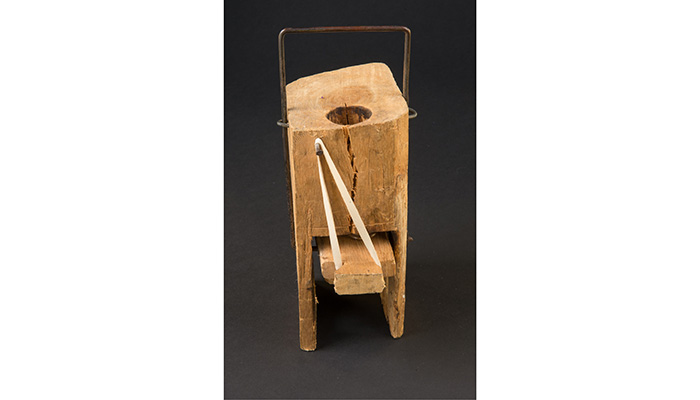
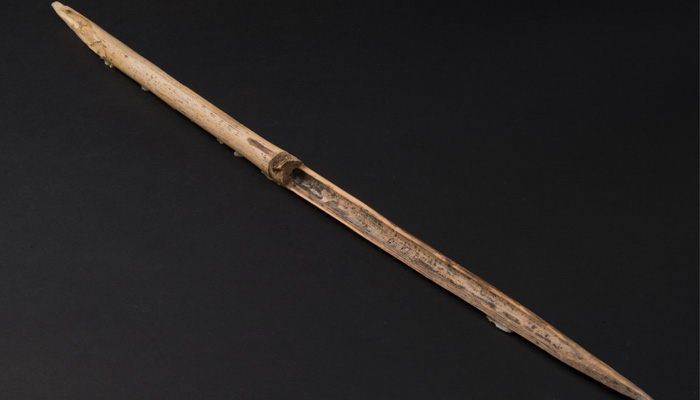
From January 1965 through June 1970, mines and booby traps caused 15% of wounds and 11% of deaths among U.S. Army troops.
A steel spike that pierced a combat boot could become a serious injury. Similar punji-stick injuries often affected the lower limbs and could make walking difficult within a short time. From January through September 1966, the hospital treated 324 patients with punji-stick wounds, accounting for 38% of injuries causes by enemy action during that period.
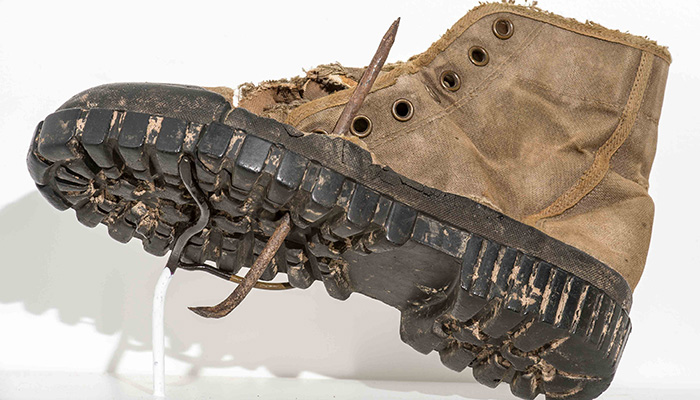
Steel spike that penetrated a boot worn by North Vietnamese solider who was later treated at the 2nd Surgical Hospital. A steel spike that pierced a combat boot could become a serious injury. Similar punji-stick injuries often affected the lower limbs and could make walking difficult within a short time. M-762.00112
The wound itself was only part of the problem. Punji sticks were sometimes contaminated with feces, and deep wounds could carry dirt and other material into the body. Treatment often required doctors to remove damaged tissue, clean the wound, administer antibiotics, and wait several days before closing the wound. Patients with these injuries spent an average of 12 days in the hospital, followed by seven to 10 days of light duty. Those who developed infections averaged 20 days in the hospital.
The danger of punji sticks also led to changes in military footwear. During the Vietnam War, the Army improved its jungle boots by adding plates to the soles to help protect soldiers from sharp stakes. The boots also featured materials that dried faster in wet conditions and soles designed for better movement through muddy terrain.
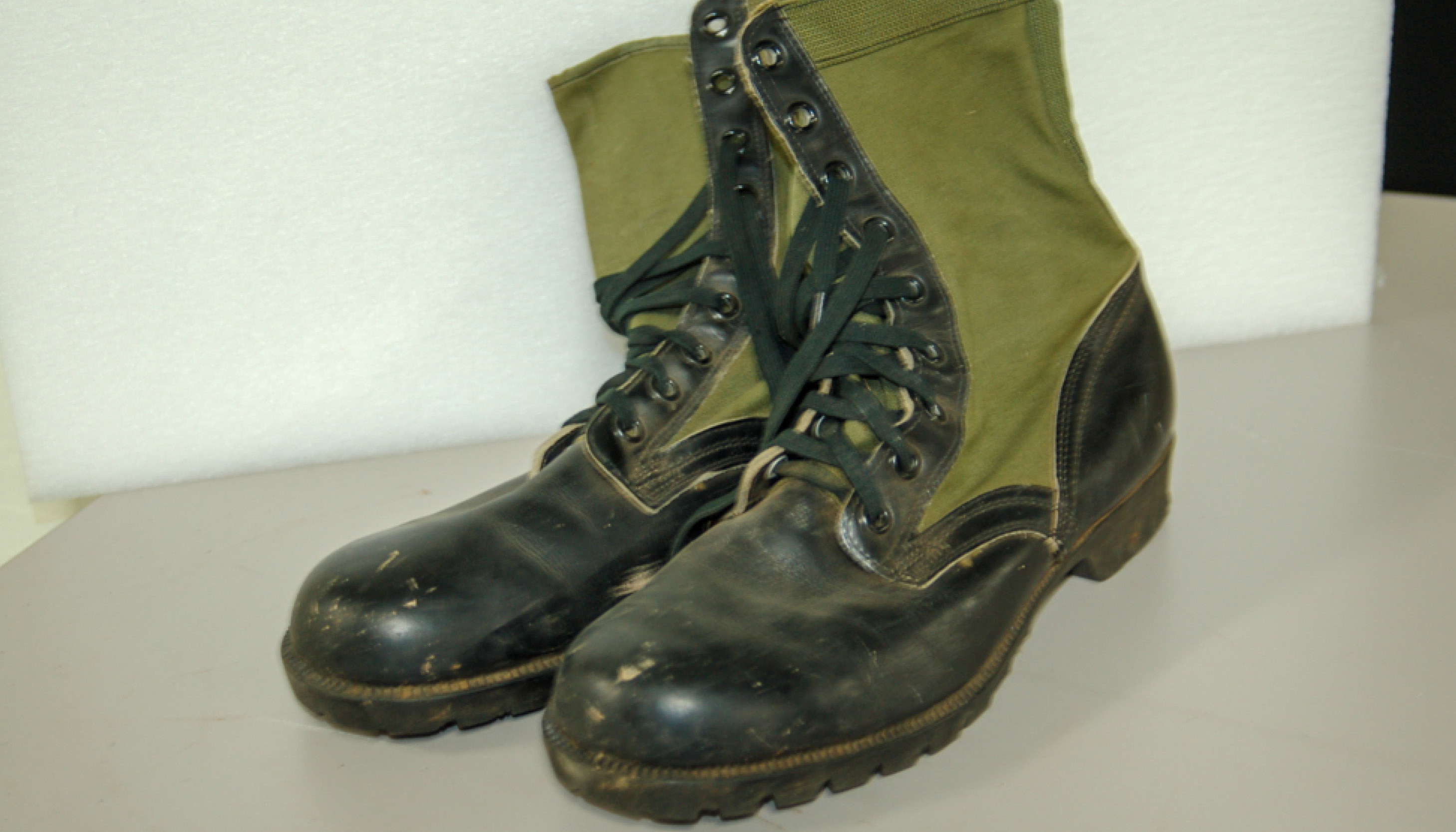
Jungle boots worn by Andrew J. Cottingham while serving with the Field Epidemiological Survey Team, 5th Special Forces Group, Studies and Observations Group, Military Assistance Command in Vietnam. NMHM 2021.0015.3
Lessons from Vietnam continued to influence how the military protects service members' feet. Later jungle boot designs replaced steel plates with lighter protective materials while improving drainage and comfort. These changes show how the injuries service members experienced during guerilla warfare helped shape military equipment and efforts to prevent similar wounds.
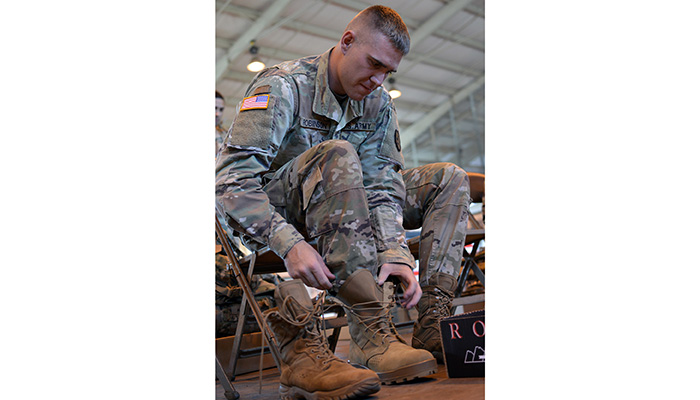
A U.S. Army Soldier assigned to the 3rd Brigade Combat Team, "Broncos," 25th Infantry Division, tries on a Jungle Combat Boot (JCB) at East Range on Schofield Barracks, Hawaii, on March 31, 2017. The JCB is a boot suitable for use in the tropical environments in the Pacific region. (U.S. Army photo by staff Sgt. Armando R. Limon, 3rd Brigade Combat Team, 25th Infantry Division)
Resources
Neel, S. (1991). Care of the wounded. In Medical support of the U.S. Army in Vietnam, 1965-1970. Department of the Army.
Lopez, C. T. (2017, March 6). New Army jungle wear gives trench foot the boot. U.S. Army.
Hawk, A. J. (2013). Medical Museum, 2nd Surgical Hospital (12th ed., Vol. 178, p. 1373).
Natick pamphlet details Vietnam support. (1967, October). Army Research and Development News Magazine (Vol. 8, No. 9, p. 26). U.S. Department of the Army.
Shepard, G. H., Rich, N. M., & Dimond, F. (1967). Punji stick wounds: Experience with 342 wounds in 324 patients in Vietnam. Annals of Surgery (Vol. 166, No. 6, pp. 902–907).